
Sofia Yablonska: Dialogue of Time
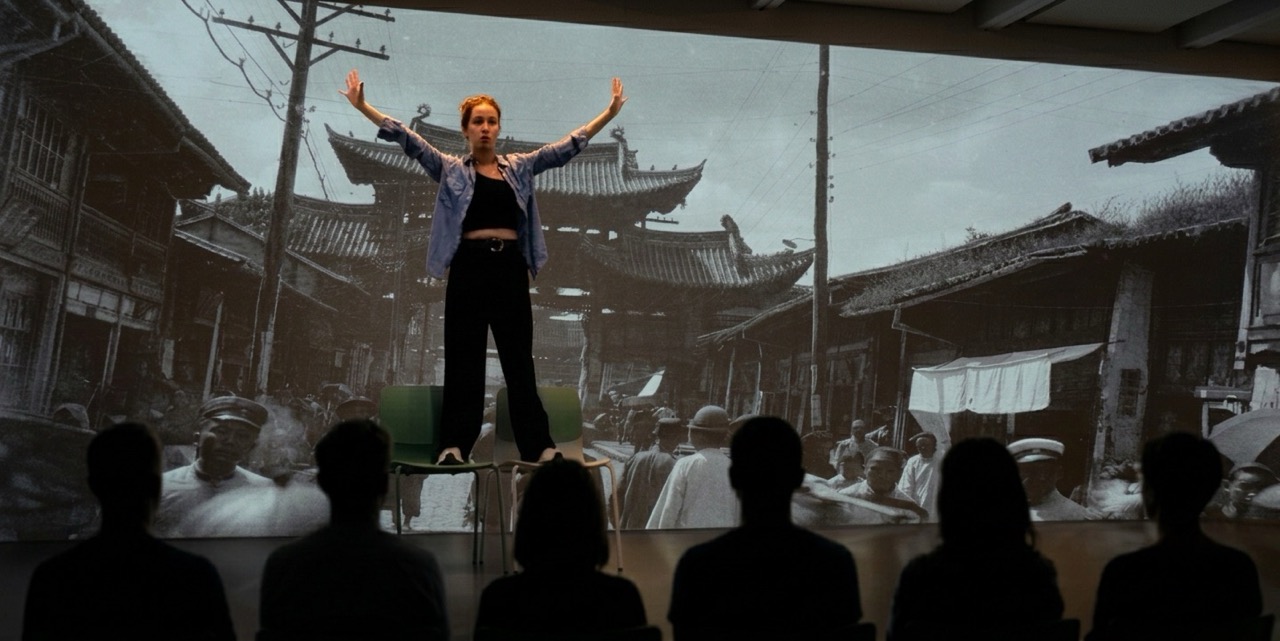
Showcase at Maison des Réfugiés (House of Refugees, Paris City Cultural Center), France, Sept. 2026
Sofia Yablonska, Dialogue of Time
Documentary performance supported by ZMINA:Resilience
Produced by La Transplanisphère (France)
In collaboration with Sofia Yablonska Foundation (Ukraine)
Olena Morentsova — Script (based on the works of Sofia Yablonska)
Anastasiia Kholina — Performing artist
Bruno Freyssinet — Director
Natalie Oudin-Yablonska – advisor
Upcoming presentations:
• #Hashtag Festival, Hamburg, Germany | 28 November 2026
• Parcours d’Exil Festival / Maison des Réfugiés, Paris | 7 December 2026
• Maison des Réfugiés, Paris | 12–14 February 2027
• Lesia Ukrainka Academic Drama Theatre, Lviv, Ukraine | 19–21 February 2027
• Dortmund Theatre KJT, Germany | April 2027
Sofia Yablonska, Passage of Time is a documentary performance which brings into dialogue the journey of Sofia Yablonska in the 1930s with the questions of exile, freedom and belonging that run through the experiences of Ukrainian women today.
Author, photographer, and filmmaker Sofia Yablonska (1907-1971) travelled the world, observing the societies she encountered and recounting her journeys in a language that combines documentary precision, poetic imagination, and a critical perspective on power dynamics. Her texts, photographs, films, and correspondence form the basis of a theatrical work where filmed memory and living presence resonate with one another.
The theatre performance offers the public a double journey: in space, through the cultures encountered by Sofia; and in time, through a dialogue between the 1930s and our present, revisited from today’s Ukraine and its relationship to the world.
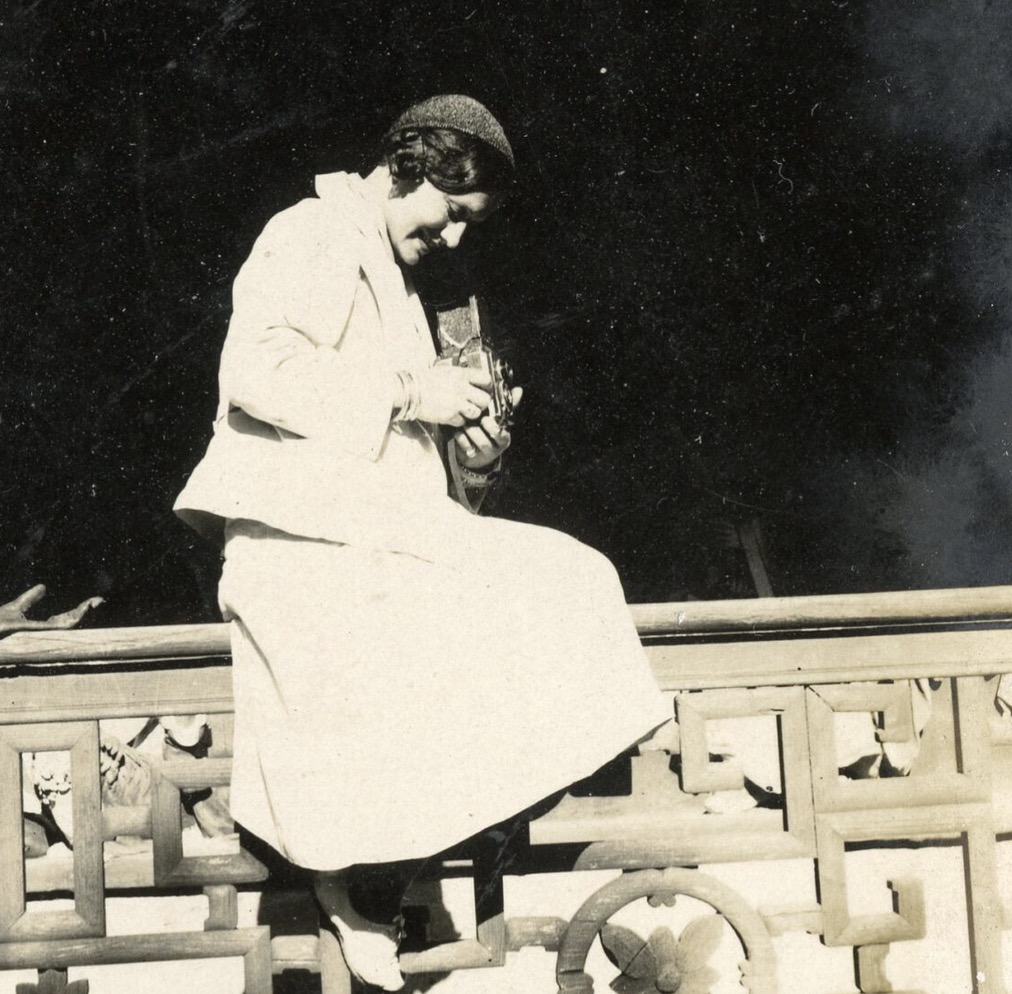
Sofia Yablonska, Yunnan, China – 1934 Bali,
photo by Sofia Yablonska (courtesy of Sofia Yablonska Foundation)
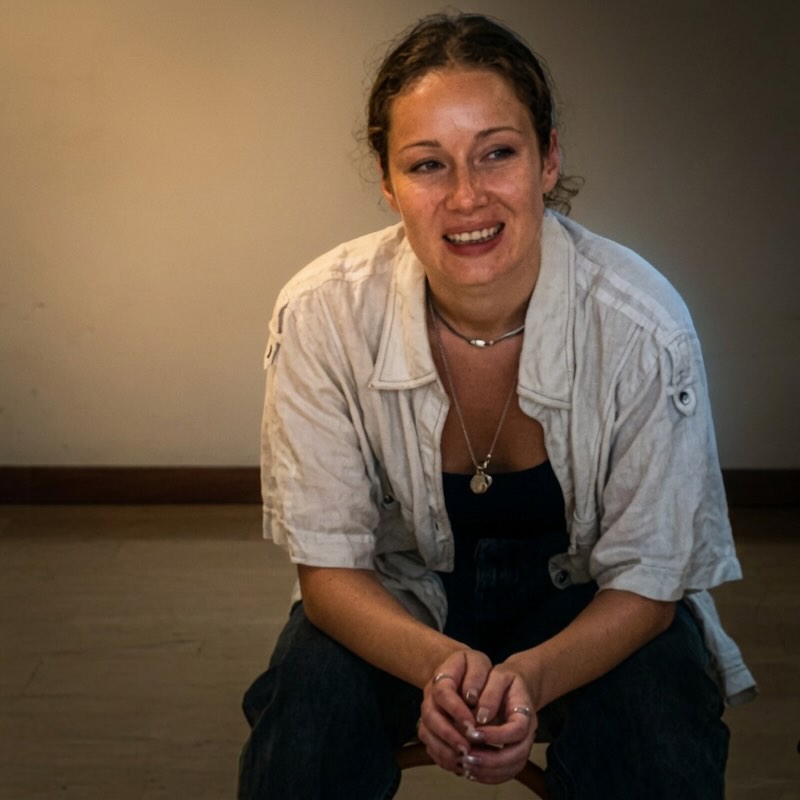
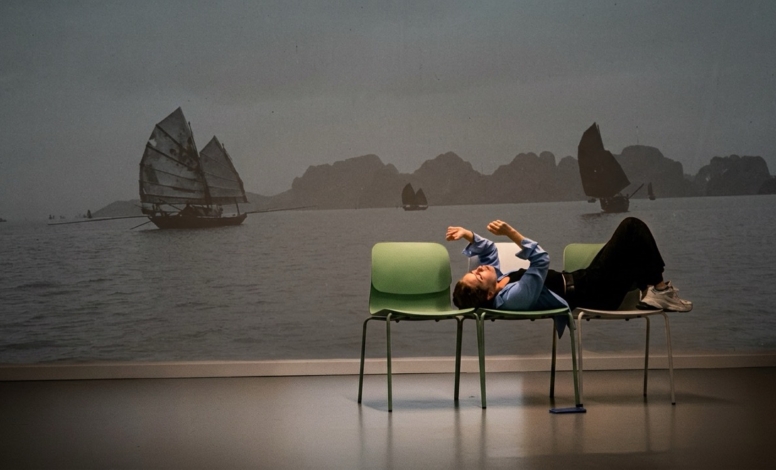
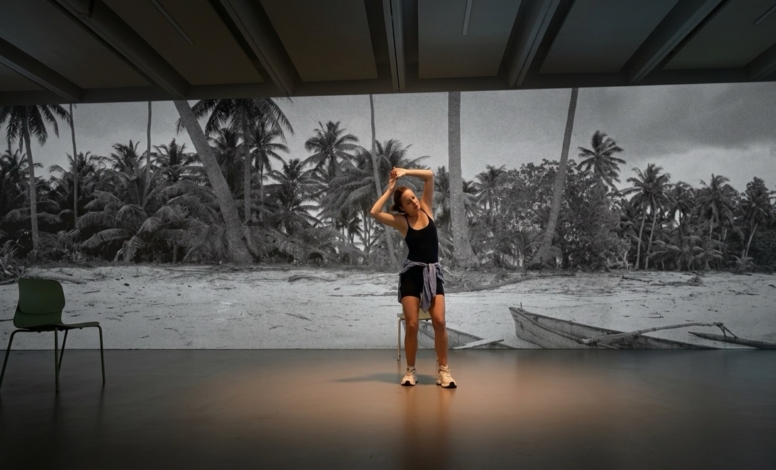
Anastasiia Kholina performing Sofia Yablonska, Tessaloniki, Greece – 2026
to leave, observe, allow oneself to be transformed
At the heart of the show lies a pivotal period in Sofia’s life: her travels in the 1930s, from Morocco to China, then to Bali, New Zealand, and Tahiti. In a context where women were expected to stay at home, she set off to explore the world, not to conquer it, but to enrich her own culture and transform her perspective.
Sofia is less looking for a definitive answer than a life path made up of risks, encounters, and constant reassessments of what a possible “paradise” is. From Morocco to Tahiti, she questions the promises of happiness associated with elsewhere: abundance, harmony with nature, a slower pace of life, but also tourist illusions and Western fantasies.
Far from offering a model to imitate or lessons in following in her footsteps, she primarily shares a question and an open quest. Her journey evokes in some ways the wanderings of Ulysses, but here it is the journey not of the conquering hero, but of a heroine who refuses to possess the world and prefers to let herself be transformed by it.
Her books don’t lay down rules: they create a logbook where the observer engages with the world, embraces doubt, and uses each encounter to question her own culture of origin, the Ukraine that shaped her and to which she remains deeply attached. The performance extends this approach: rather than providing answers, it invites spectators to consider what it means to expose themselves to otherness and allow this experience to reshape their relationship to the world and to their own home.
A sensitive reflection of contemporary exiles
The play juxtaposes Sofia’s journey with that of many contemporary Ukrainian women forced to leave their country in search of safety. It explores what it means to leave and, despite the distance, to maintain a strong connection with one’s language, stories, and cultural practices.
This comparison does not conflate chosen travel with forced exile. It opens a dialogue between different experiences, around common questions: how to inhabit another country? What do we retain from our home? How do we learn to live in other languages without losing our own? How can we make displacement an experience that transforms our perspective on the world and on ourselves?
While Russia’s war against Ukraine is leading many women and their children to settle permanently in Europe, focusing on a historical figure offers a different perspective on the issues of departure, belonging, and rebuilding. Without erasing their social and political dimensions, the play shifts these themes into a poetic and cultural realm.
She thus offers representations of Ukrainian women that are not limited to vulnerability: women capable of creating, thinking, transmitting, carrying on the memory and contributing to the future of their country, even from a distance.
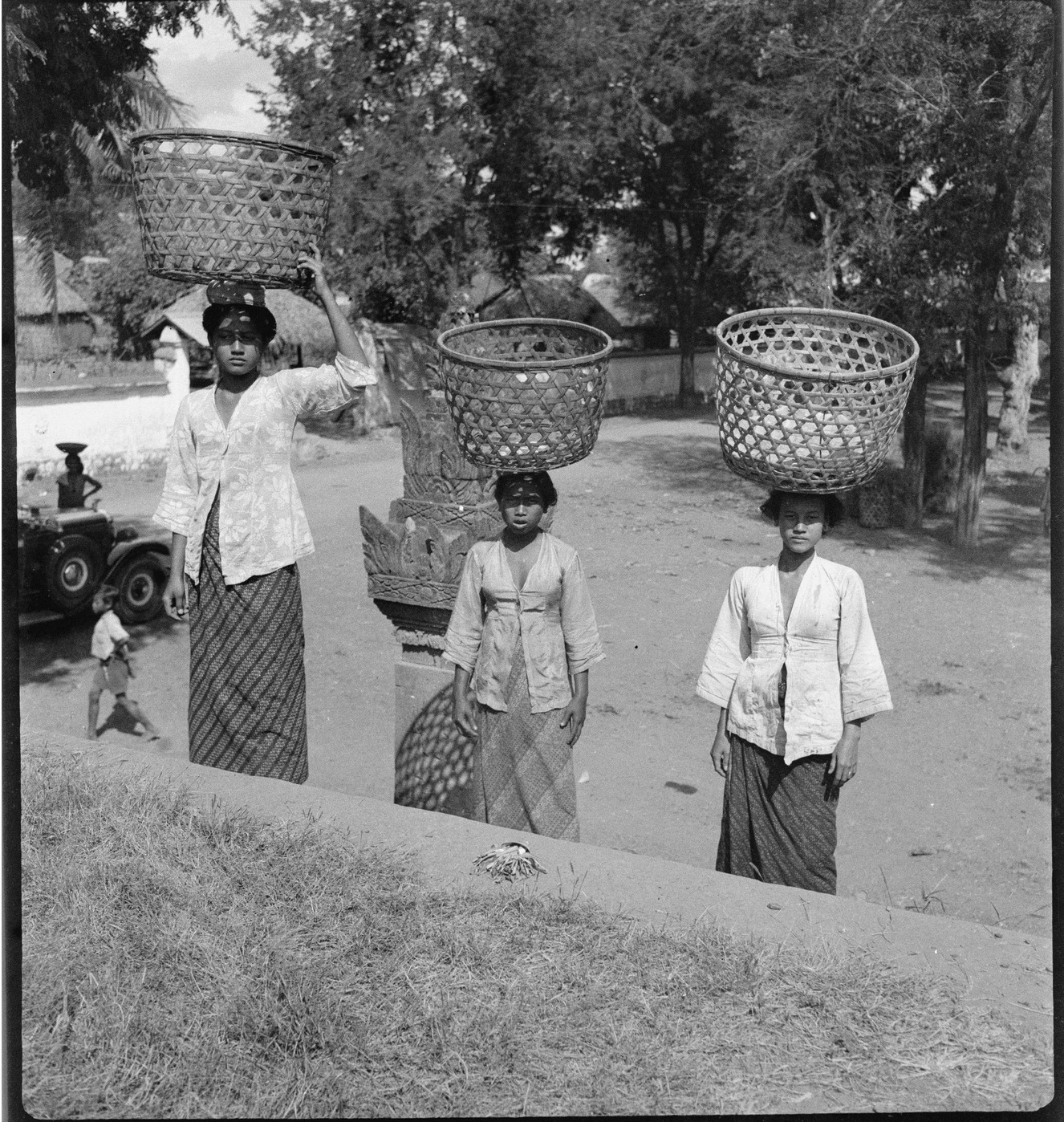
Bali, 1932, photo by Sofia Yablonska (courtesy of Sofia Yablonska Foundation)
The show: a dialogue between two eras
Two mirrored female figures
The dramaturgy is based on a close dialogue between two time periods and two female figures.
On one side, the Sofia of the 1930s, as revealed by her books, letters, articles and travelogues: a woman who forges her critical mind, refines her sensitivity and becomes fully aware of the depth of her Ukrainian roots.
On the other hand, a contemporary figure, portrayed by a Ukrainian actress now living in exile in France, connects these materials in the light of current wars, displacements and struggles, projecting onto them her own questions of exile and fidelity to her culture of origin.
This dialogue is not simply an illustrative back-and-forth between past and present. The journey emerges as a true rite of passage: it gives Sofia her voice as an author, shapes her personality, and structures her perspective on the world. In turn, it becomes a prism through which to consider the trajectories of Ukrainian women today.
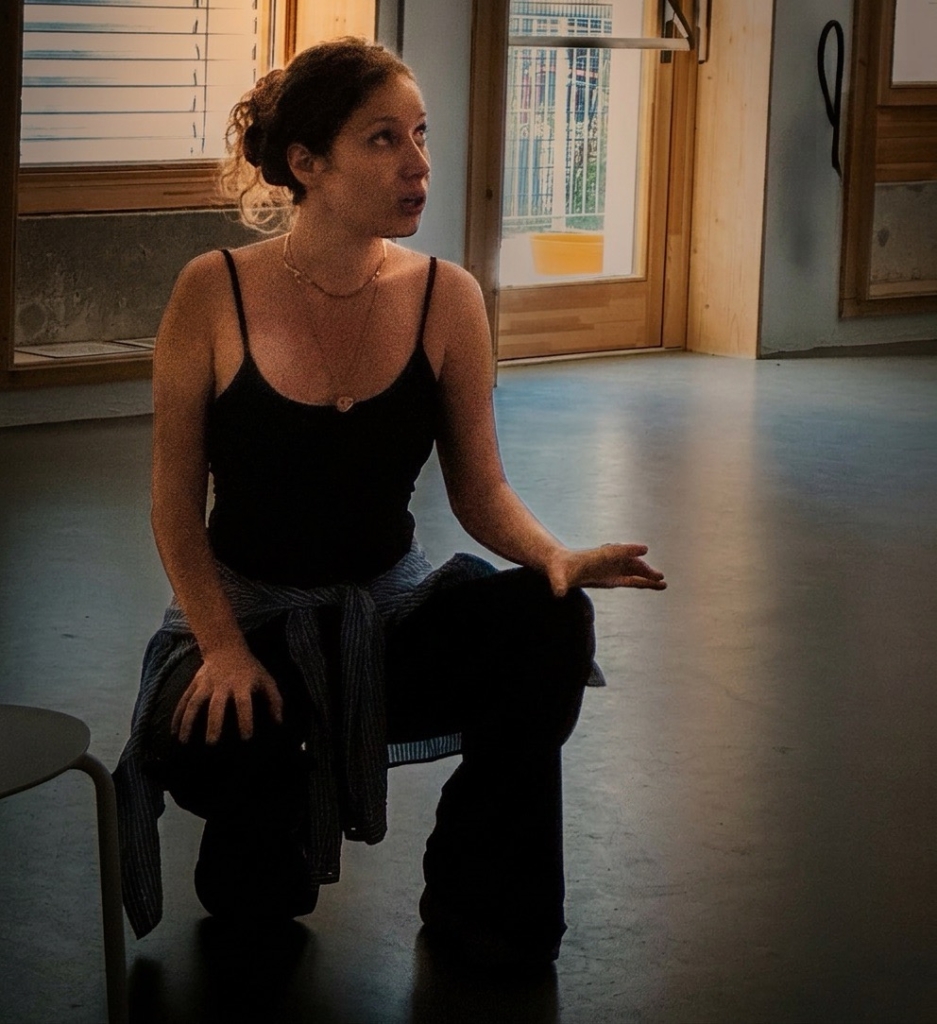
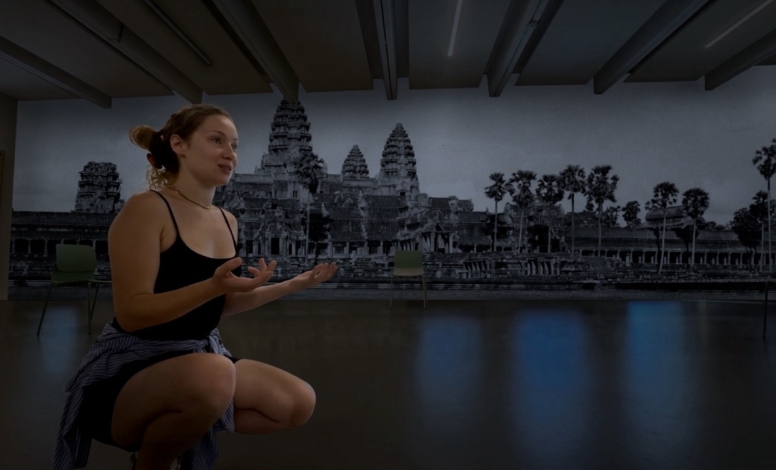
Anastasiia Kholina performing Sofia Yablonska, House of Refugees, Paris – 2026
A style of writing made up of stories, images, and situations
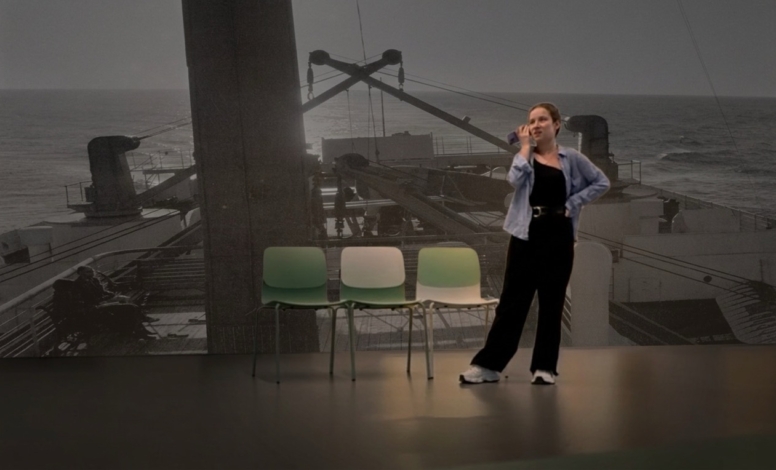
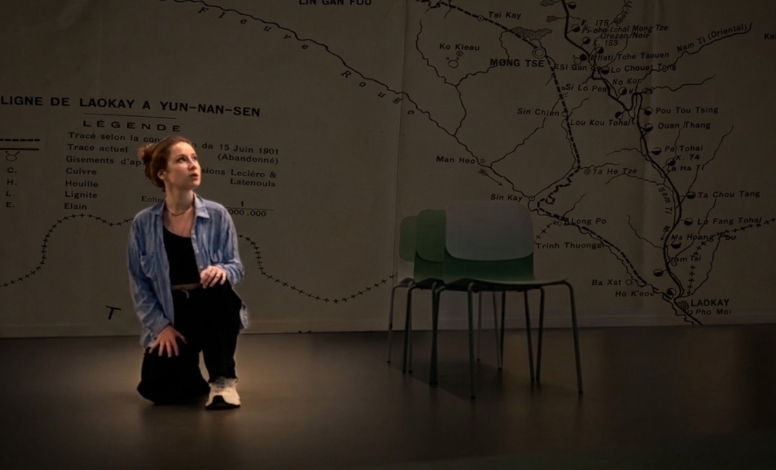
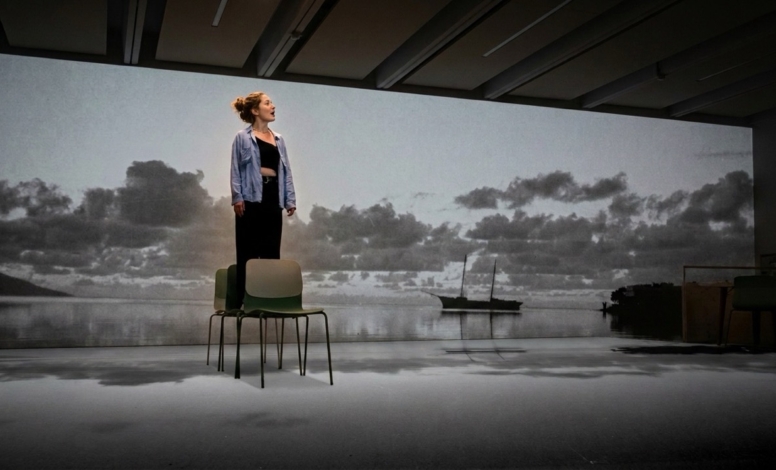
The performance draws on Sofia’s travelogues, articles, and letters, but also—and perhaps most importantly—on her images: photographs and films projected in the space. Through these documents, the audience witnesses the unfolding of her perspective on the cultures she encountered.
The narrative moves between several registers:
- A logbook, where the heroine recounts, contextualizes and shares her observations.
- Introspective moments, where the narrative focuses on the intimate experience of travel and its effects on self-knowledge.
- Dialogue scenes, inspired by the conversations that Sofia recounts in her writings.
- A mise en abyme, where Sofia finds herself facing her own images, almost in the place of the spectators, discovering and commenting on her projected work.
- An epistolary dimension, which reveals his doubts about his legitimacy, his exchanges with his loved ones and his obstinate quest for a “paradise on earth”.
The aim is not to produce an illustrated lecture, but a true theatrical work where Sofia’s words, images and questions become dramatic situations, conflicts and intimate monologues.
Two formats are offered: a full version of 70 minutes and a 40-minute version intended for school audiences. Both retain the structure of the initiatory journey, adapting the pace and density of the material to the performance context.
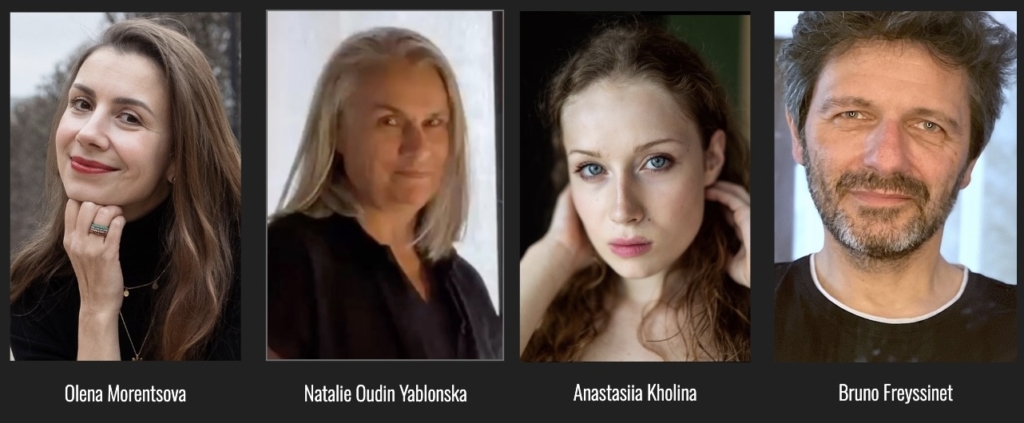
The team
Dialogue of Time brings together three artists and a custodian of memory around the work of Sofia Yablonska.
Ukrainian playwright Olena Morentsova creates the dramaturgical adaptation of Sofia’s writings. Together with Bruno Freyssinet, director and project lead at La Transplanisphère, she transforms travel accounts, correspondence and archival materials into living theatre. Their collaboration, which began in 2022 during an Erasmus+ residency, brings contemporary writing into dialogue with documentary theatre, at the intersection of the personal and the political.
Ukrainian actress Anastasiia Kholina, herself living in exile, embodies this dialogue across time. Interacting with photographs, films and soundscapes, she makes Sofia’s words resonate with contemporary experience. The archives become fellow performers in a production where memory meets live presence.
Alongside them, Nathalie Oudin-Yablonka, Sofia’s granddaughter and representative of the Sofia Yablonska Foundation, shares her family’s legacy and supports the creative process. Working with the Foundation’s team, she helps identify, select and contextualise the writings and visual documents. More than simply providing access to archives, this collaboration sustains a shared exploration: how to remain faithful to Sofia’s distinctive voice while opening her work to new interpretations and new audiences.
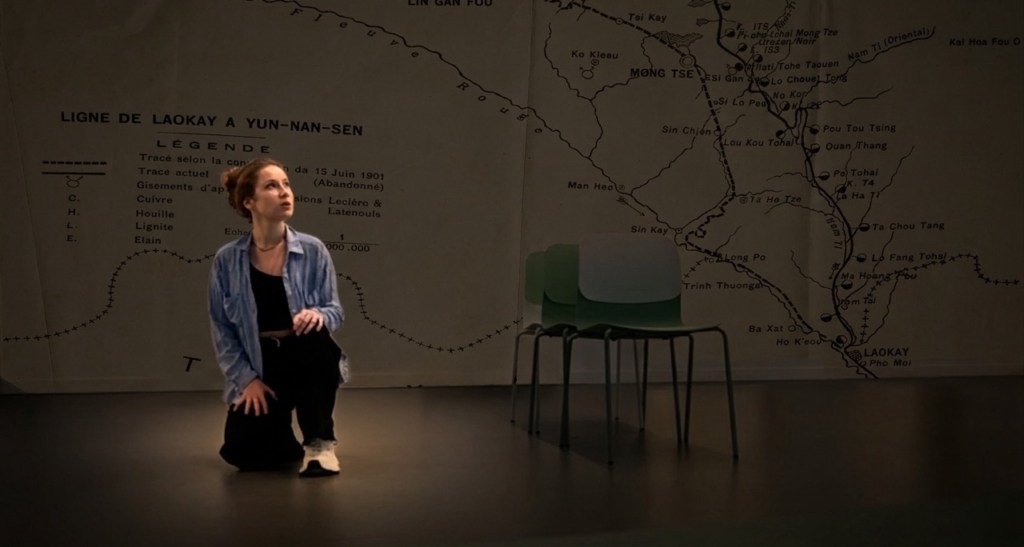
Sofia’s Journey’s Key Stops
Sofia’s journey provides the narrative framework for Dialogue of Time. Each stop brings together a moment from her life, a question about the world and a dramatic encounter.
Morocco — Between Wonder and Critique
In the streets, markets and cafés of Marrakech, Sofia encounters a dazzling world of colours, sounds and sensations. Yet her fascination is challenged by the power relations she witnesses, particularly those shaping women’s lives. This first encounter raises a question that runs throughout the performance: how can we look beyond the allure of a sensory “paradise” to engage with the realities of other people’s lives?
China — Filming, Understanding, Resisting
In China, Sofia’s perspective develops, and filmmaking becomes central to her exploration. Her accounts examine the relationship between the filmmaker and those being filmed: the trust that must be built, the suspicion a camera can provoke and the means used to capture images. Her descriptions of communities in Yunnan also raise questions about cultural assimilation, domination and the dangers faced by those seeking independence—concerns that resonate with her own Ukrainian experience.
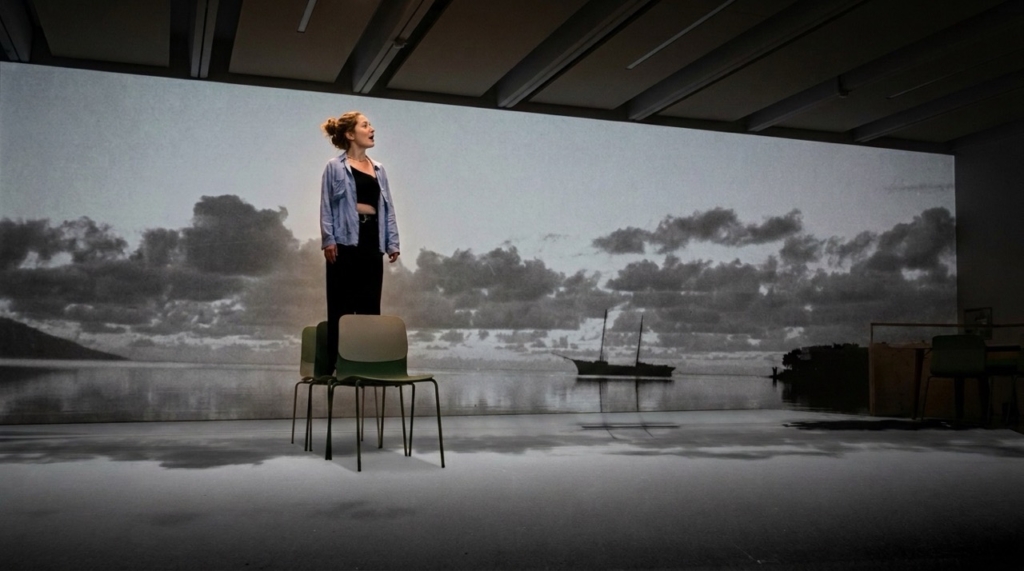
Bali — The Traveller Confronts Her Own Position
In Bali, Sofia observes how rituals and cultural practices endure under colonial rule, paying particular attention to women’s lives. Yet she also describes an island increasingly turned into a spectacle for visitors and admits to feeling ashamed of her own curiosity. This stop turns the gaze back on the European traveller: how can we encounter, observe and bear witness without becoming complicit in cultural appropriation?
New Zealand — The Erasure of a Culture
In her account of Auckland, Sofia contrasts the Māori culture she expected to encounter with a reality she perceives as largely anglicised. Her outrage at this apparent cultural erasure reveals a deeper anxiety: that Ukraine, too, might lose its language and collective memory under the domination of neighbouring empires.
Tahiti and Bora Bora — Paradise Put to the Test
Here, Sofia takes her search for an earthly paradise to its furthest point. She encounters relationships with time, work and everyday life that challenge her European assumptions. Yet this apparent paradise begins to fracture when she is expected to represent the West and pass on its norms, while her own desire is to learn from others and discover different ways of inhabiting the world. The final stop leaves an unsettling question: paradise for whom, at what cost and with what consequences?